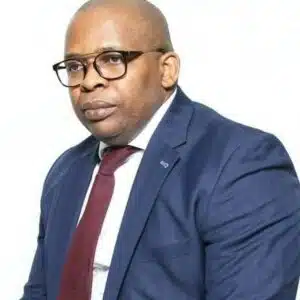
- Studied International Refugee Law, Armed Conflict, and Psychoanalysis
 Alphonsus Uche Okafor-Mefor, a British-Nigerian political activist and media broadcaster, rose to prominence as the Deputy Leader of the Indigenous People of Biafra (IPOB), a separatist movement advocating for the independence of Biafra from Nigeria. Born in Abatete, Anambra State, Mefor became a central figure in pro-Biafran activism, known for his fierce advocacy and later, for his public and ideological fallout with IPOB leader Nnamdi Kanu. His split from the group in 2020 marked a turning point in the internal dynamics of Biafran separatism, as he pursued a more rights-based, non-violent path to self-determination. Amidst controversies, accusations, and shifting alliances, Uche Mefor remains a polarizing and influential voice in the ongoing struggle for Igbo identity and autonomy.
Early Life and Education:
Alphonsus Uche Okafor-Mefor was born on April 10, 1972, in Abatete, a town in Idemili North Local Government Area of Anambra State, Nigeria. He pursued higher education in the United Kingdom, studying International Refugee Law, Armed Conflict, and Psychoanalysis. His academic background laid the foundation for his involvement in human rights and political activism.(Wikipedia, TheFamousNaija)
Career and Activism:
Mefor’s activism began with his involvement in the Movement for the Actualization of the Sovereign State of Biafra (MASSOB) and the Biafra Actualization Forum. He later became a prominent figure in the Indigenous People of Biafra (IPOB), serving as the Deputy Leader and Deputy Director of Radio Biafra. His role in IPOB was instrumental in promoting the group’s agenda for Biafran independence.(Wikipedia, Nairaland)
Split from IPOB:
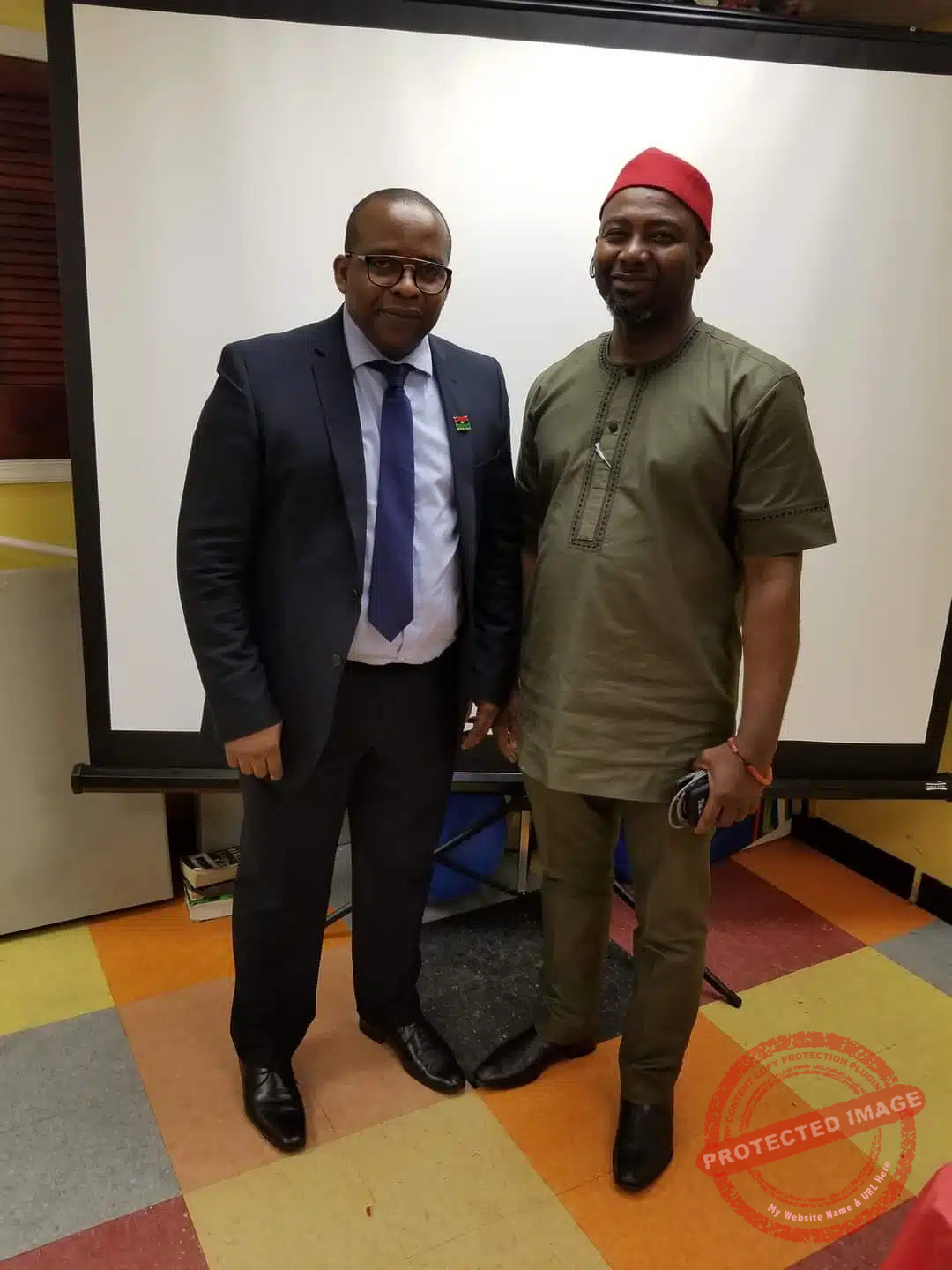
In November 2020, Alphonsus Uche Okafor-Mefor publicly severed ties with the Indigenous People of Biafra (IPOB), the organization he had helped build and shape as its Deputy Leader and Deputy Director of Radio Biafra. His departure was the culmination of months of growing tension between him and IPOB’s Supreme Leader, Nnamdi Kanu. The split was not only ideological but deeply personal, marking one of the most significant rifts in the modern Biafran movement.
Mefor expressed deep concern over what he described as Kanu’s increasingly authoritarian control over IPOB and its media arms, particularly Radio Biafra. He criticized Kanu’s escalating rhetoric and endorsed methods—especially the perceived endorsement or tolerance of violence, threats, and personal vendettas against dissenters within and outside the movement. According to Mefor, the IPOB leadership had become intolerant of internal critique, and the movement, originally built on the ideals of peaceful resistance and grassroots advocacy, was becoming a personality cult centered on Kanu (PM News Nigeria, 2020).
One of the major flashpoints leading to Mefor’s resignation was the handling of IPOB’s security wing, the Eastern Security Network (ESN), which many critics—including Mefor—believed introduced militarism into a movement that had largely relied on civil protest and international advocacy. Mefor was particularly vocal about the danger of IPOB’s operations being linked to killings and violent acts in the South-East, warning that such actions were counterproductive and exposed members to legal and reputational risks (Sahara Reporters, 2022).
Following his resignation, Uche Mefor founded the Biafra Human Rights and Freedom Radio (BHFR)—a platform he described as a corrective to what IPOB had become. BHFR was intended to return the Biafran independence movement to its foundational focus on non-violence, international diplomacy, and human rights advocacy. Through this platform, Mefor continued to promote Biafran self-determination but insisted on separating the cause from militarization and internal authoritarianism.
His departure drew swift backlash from loyalists of Nnamdi Kanu. IPOB spokespersons and several pro-Biafra media outlets accused Mefor of betrayal, sabotage, and even secretly working with the Nigerian government and British security agencies to undermine IPOB’s credibility. Some also accused him of financial impropriety during his time with Radio Biafra—a claim he strongly denied (Ripples Nigeria, 2022). Mefor responded by labeling IPOB’s leadership as intolerant and tyrannical, warning that the group’s increasing reliance on intimidation and violence would eventually destroy the movement’s moral foundation.
In various interviews and social media posts, Mefor emphasized that his break from IPOB was not a retreat from the struggle for Biafra but rather a redirection toward a more sustainable and legitimate form of activism. He called on pro-Biafra groups to unite around shared values rather than individual personalities, and urged the international community to distinguish between different voices within the Biafran self-determination movement.
The split between Mefor and Kanu remains one of the most defining internal crises in IPOB’s history, fracturing its support base and forcing many followers to question the ideological direction of the group. While Nnamdi Kanu continued to command a large and loyal following, particularly among the diaspora, Mefor’s breakaway stance introduced an alternative narrative—one grounded in legality, diplomacy, and institutional legitimacy.
Controversies and Accusations:
After his dramatic resignation from the Indigenous People of Biafra (IPOB) in November 2020, Alphonsus Uche Okafor-Mefor quickly found himself at the center of a whirlwind of controversies and targeted accusations. Once a revered figure within the pro-Biafra movement, Mefor’s ideological split from IPOB and its leader Nnamdi Kanu triggered a fierce backlash from within the ranks he had helped build. The accusations were as personal as they were political, ranging from betrayal to espionage and financial impropriety.
Among the most serious allegations levelled against Mefor was that he was covertly working with both the British intelligence agency MI5 and the Nigerian government to sabotage IPOB from within. Pro-Kanu social media accounts and affiliated media platforms circulated unverified claims suggesting that Mefor’s departure was orchestrated in collaboration with external enemies of Biafra, with some suggesting he had been planted all along. The claims were never substantiated with credible evidence, but they gained traction among some IPOB supporters, particularly those aligned with Kanu’s hardline approach (Vanguard News, 2024).
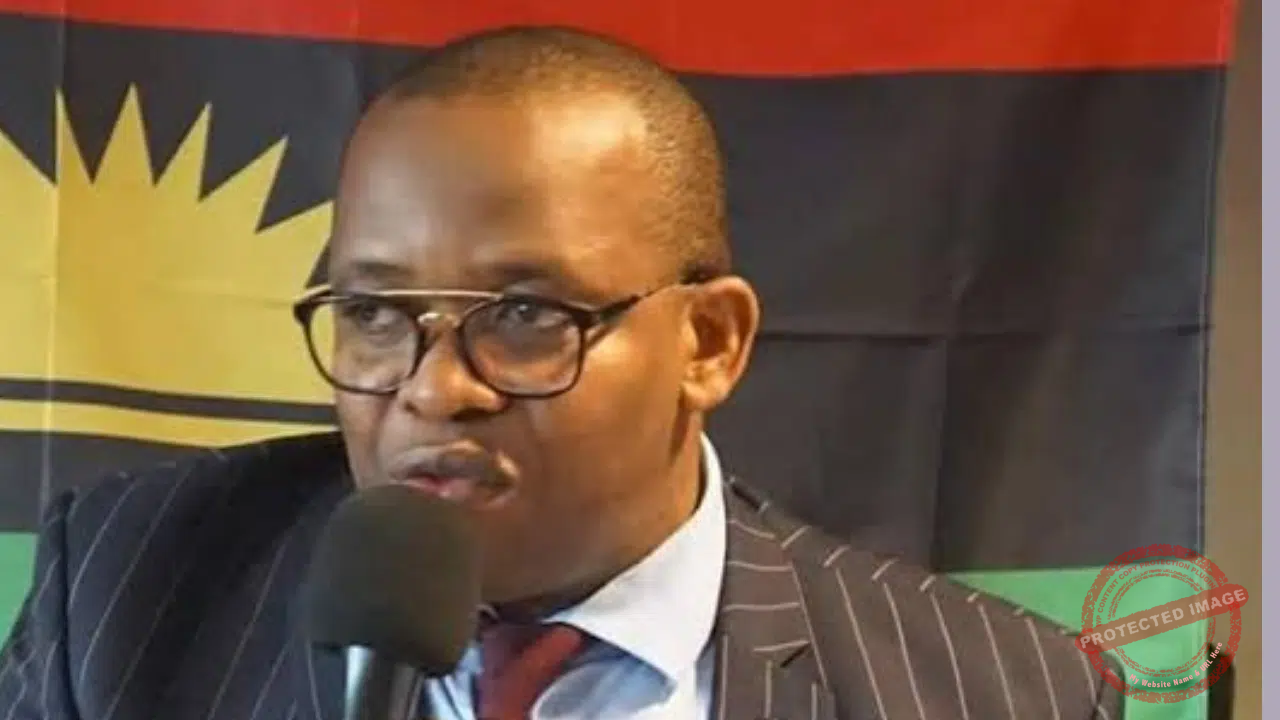 Adding to the firestorm, Mefor was also accused of misappropriating funds during his tenure as Deputy Director of Radio Biafra. Some IPOB members alleged that he diverted donations made by the Biafran diaspora to personal accounts and failed to properly account for resources meant for the operations of Radio Biafra and IPOB’s European offices. Critics claimed that his media platform, Biafra Human Rights and Freedom Radio (BHFR), was financed using these allegedly misappropriated funds (Ripples Nigeria, 2022).
Mefor, however, responded firmly and repeatedly denied all accusations. He dismissed them as smear campaigns engineered by IPOB’s inner circle to discredit him and silence dissent. In an extensive post on his Facebook page in 2021, Mefor argued that the accusations were part of a deliberate campaign to tarnish his image for standing up to what he called IPOB’s “dictatorial and toxic leadership culture.” He emphasized that during his time as a senior IPOB official, he worked to ensure the accuracy and legitimacy of the group’s asylum claims in the United Kingdom. According to him, the increasing association of IPOB with violent actions in Nigeria endangered the safety of its members abroad and jeopardized their legal standing in asylum cases (Sahara Reporters, 2022).
He further clarified that his concern was not about abandoning the Biafran struggle, but about protecting its credibility in the international space, especially in the UK where IPOB activities were under growing scrutiny. “I fought to protect the legal interests of genuine Biafran asylum seekers,” he said, “and to shield the movement from being classified as a violent separatist group—which would render us stateless and vulnerable.”
Tensions between Mefor and IPOB reached a new high in early 2021, when IPOB’s Directorate of State (DOS) released a statement officially denouncing him. The statement accused him of insubordination, betrayal, and spreading falsehoods against the leadership of the group. Mefor countered with a detailed response, calling the DOS “enablers of tyranny” and alleging that the organization had lost its democratic essence.
The controversies surrounding Mefor also led to deep divisions within the wider Biafran support community, particularly in the diaspora. Some IPOB members left the group to follow Mefor’s more diplomatic and non-violent approach, while others doubled down on Kanu’s methods. This fragmentation was particularly evident on platforms like Facebook, YouTube, and WhatsApp, where former comrades now clashed in bitter ideological battles.
Despite the noise, Mefor remained steadfast. He continued using BHFR to articulate his vision of Biafra through peaceful resistance, international diplomacy, and adherence to international law. In his words, “You cannot fight injustice with injustice, nor demand legitimacy through illegitimate means.”
The controversies that followed Uche Mefor’s resignation not only reshaped his public image but also spotlighted the internal fragility of IPOB’s organizational structure. While his critics saw him as a traitor, many others—especially outside Nigeria—considered him a voice of moderation in a movement increasingly associated with militancy and extremism.(Vanguard News)
Associations with Other Igbo Figures:
Mefor has collaborated with various notable Igbo figures in his activism. He worked alongside Ralph Uwazuruike, the founder of MASSOB, and Asari Dokubo, a former leader of the Niger Delta People’s Volunteer Force. Together, they formed the Biafra De Facto Customary Government, with Mefor serving as the Head of Information and Communication. This alliance aimed to promote Biafran self-determination through peaceful means.(Sahara Reporters, Wikipedia)
Personal Life:
Mefor maintains a private personal life. He is married, but details about his spouse and children are not publicly disclosed. He prefers to keep his family away from the public eye, focusing instead on his activism and political engagements.(sbmintel.com)
Conclusion:
Alphonsus Uche Okafor-Mefor’s journey from a deputy leader in IPOB to an independent activist underscores the complexities within separatist movements. His emphasis on non-violence and human rights distinguishes his approach in the quest for Biafran independence. Despite facing controversies and challenges, Mefor continues to advocate for the rights and self-determination of the Igbo people.(Vanguard News, Nairaland)
References:
- Vanguard Nigeria. (2024, October). Alphonsus Uche Okafor-Mefor: The Dual Identity of a Pro-Biafra Activist. Retrieved from https://www.vanguardngr.com/2024/10/alphonsus-uche-okafor-mefor-the-dual-identity-of-a-pro-biafra-activist/(Vanguard News)
- Sahara Reporters. (2022, April 19). Ex-IPOB Deputy Leader, Mefor Says Nnamdi Kanu, Separatist Group Behind Killings In South-East.
- Wikipedia. (n.d.). Uche Mefor. Retrieved from https://en.wikipedia.org/wiki/Uche_Mefor
- The Famous Naija. (2021, May 8). Uche Mefor Biography, Pictures, Age, Wife, Net Worth, Radio, Wikipedia. Retrieved from https://www.thefamousnaija.com/2021/05/uche-mefor-biography-pictures-age-wife.html(TheFamousNaija)
- SB Morgen Intelligence. (2021, March). What does the split in IPOB mean? Retrieved from https://www.sbmintel.com/wp-content/uploads/2021/03/202103_IPOB-split.pdf(sbmintel.com)
- Ripples Nigeria. (2022, April 20). Again, Uche Mefor accuses Nnamdi Kanu of causing violence in South-East. Retrieved from https://www.ripplesnigeria.com/again-uche-mefor-accuses-nnamdi-kanu-of-causing-violence-in-south-east/(Ripples Nigeria)
- PM News Nigeria. (2020, November 24). IPOB: Why Nnamdi Kanu, Uche Mefor are at war. Retrieved from https://pmnewsnigeria.com/2020/11/24/ipob-why-nnamdi-kanu-uche-mefor-are-at-war/(PM News Nigeria)
- BBC Pidgin. (2021, April 7). Owerri Prison Break: I no fit condemn di freeing of prisoners – Uche Mefor, former IPOB Deputy Director. Retrieved from https://www.bbc.com/pidgin/tori-56665331(BBC)
- Vanguard Nigeria. (2024, October). Alphonsus Uche Okafor-Mefor and the Biafra Movement: Advocating for Igbo Self-Determination. Retrieved from https://www.vanguardngr.com/2024/10/alphonsus-uche-okafor-mefor-and-the-biafra-movement-advocating-for-igbo-self-determination/(Vanguard News)
- Wikipedia. (n.d.). Indigenous People of Biafra. Retrieved from https://en.wikipedia.org/wiki/Indigenous_People_of_Biafra

Views: 0
Related posts:
Victor C. Umeh
Onny Michael
Patience Ozokwor
N:B Please send your updated CV to: info@igbopeople.org – Editor
© igbopeople.org
All entries on this website will be periodically updated to add, modify, or amend the information or content of existing entries. Consequently, no legal action will be entertained against the biographer for any information considered incomplete or insufficient.
Views: 0